Riot Us.

I’ve just returned from the first of three ‘Camden Summits’: community events in which residents, officers, councillors and representatives of businesses and voluntary sector organisations have been invited to come together and share ‘views on the public disorder in Camden’. To my chagrin, an astute member of the public named causes which in my previous blog I missed: the British Board of Film Classification and 9 o’clock watershed.

That aside, it was a fairly typical community meeting. Fronted by Cllr Nasim Ali, with additional perspectives from Borough Commander John Sutherland and CNJ news editor Richard Osley, the evening opened with a series of reflections and questions before being opened up to the floor: over one hundred sat around circular tables, with plenty offering comments, questions and opinions (many of which were not altogether relevant).

This is a brief blog, and not one intended to analyse the meeting itself. It wasn’t bad, it wasn’t brilliant. It was my first encounter with the Borough Commander, and I have respect for Cllr Ali. It was nice to see Richard Osley’s opinions added to the mix, a voice problematising and questioning some of the assumptions and narratives being articulated, in that won’t-quite-go-away kind of way. But I think there’s a bigger question we have to ask.

I don’t know how other local authorities or communities have responded to the riots. I don’t know whether what Camden has done in having these conversations is beyond or short of what others are doing. But it did strike me on the journey home, that we should be very clear about one thing. These summits are not about finding solutions. They are not about seizing an opportunity presented by the seismic but all-too-temporary moment we experienced in the evenings of early August. That’s not intended as a criticism: they should be measured against what they’re intending to achieve. I’d certainly prefer they were happening than they weren’t. But, they are at best an opportunity for a collection of people to air their views, and to air views that may well be fed back into the various meetings which have been set up. This is not a bad thing. But it is not more than this.

Any sensible person who has taken the opportunity to sit back and observe the quite frankly endless cascades of analysis and comment since the riots happened will be well aware that the causes, explanations and justifications being given are a dime a dozen. Even those with a certain (sometimes party political) aversion to particular analyses and positions should be able to understand that the truth resides across a wide range of causes and symptoms. For example: Is it a poverty-related issue? Yes. Is it a values-related issue? Yes. Is it an isolated instance? Not really. Is it inexcusable criminality? Well, sort of. I mean, yes. But that sort of feels like an easy answer.

The riots give us a rare and once-in-a-generation (hopefully not more) opportunity to genuinely reflect and to fashion an ambitious, visionary and integritous response to the direction in which our society is moving. If we were serious about this response, we would for starters be taking at minimum a month to engage every demographic across the borough we could think of, through all sorts of fora: community meetings, surveys and questionnaires, innovative stakeholder consultation initiatives, going door-to-door, inviting opinion pieces, setting up online spaces. We’d be casting the net far and wide, and we’d be organising what we were learning into different categories: Questions. Opinions. Analysis. Randoms.

We’d then be looking at how we could explore these findings further. Why not group them into several major categories? Why not look at the research and reflections on these areas published elsewhere? Why not engage expert organisations in these categories around their opinions? Why not hold a lecture series or discussion panels in which these subjects were outlined and debated? Why not bring them together in a way which sought to understand the different and complex factors at play and how they have contributed, interacted and resulted in the riots?

And then, the ‘where next’. Perhaps this is the biggest sacrifice we need to accept when we can only afford to invest minimal resources in such a process. It would be extraordinary if the entire purpose of this process was to develop a manifesto for change in Camden. To explore the very holistic and wide-ranging requirements of us as a borough – individually, in our communities, in our businesses and organisations, in our council – which need to be thought about and addressed. The cuts, the Future Jobs Fund, sponsoring a young person, ensuring the Education Commission is engaged in these debates, challenging VCS organisations to and civil society to adopt deliberate approaches which support communitarianism rather than individualism. Real suggestions to real causes developed through real discussion.

Of course, this is an ambitious remit and not one which we feel is affordable given the terrible constraints on public spending we’re currently facing. There are also legitimate critiques of this back-of-an-envelope suggestion. What can be done about areas which typically are the responsibility of central rather than local government? Where does the resource for this process come from? Does our political system allow space for questioning rather than asserting? But we should be clear. Discussing, understanding, analysing and responding to this challenge cannot be done meaningfully in one, two or three Camden summits. If the riots are to become a turning point, a learning moment: then we should be bucking a trend and investing in a process which does it justice. This evening reinforced my sense that we have some very impressive people in Camden. How can we afford not to take the opportunity?
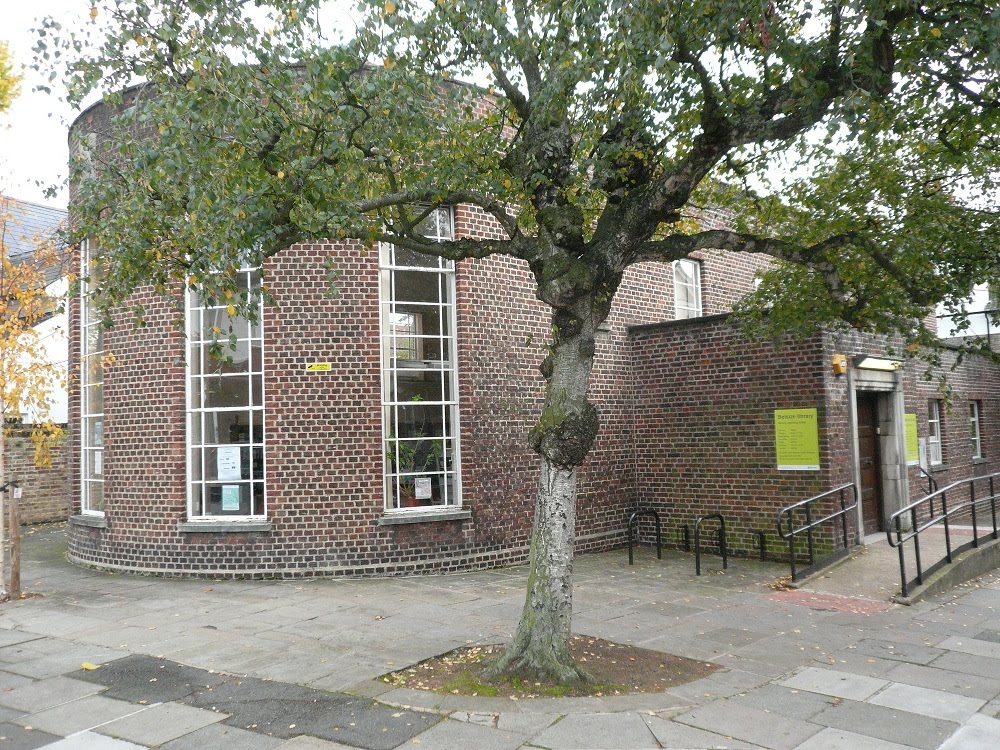
Why the Winch has got involved in Belsize Library

It’s quite possible a few eyebrows will have been raised with the news that, amongst the headlines of libraries ‘going it alone’ and ‘call-ins’, the Winchester Project has been mentioned as a possible ‘community-led solution’ for Belsize Library. Indeed, it’s been an interesting process for us, and one which reflects a conversation happening across much of the public and voluntary sector.

The possibility of getting involved with Belsize Library emerged last November, when the Cabinet published its medium-term financial strategy for dealing with the budget reduction from central government. Belsize has always been one of the most vulnerable sites, scoring relatively low on usage and lending rates in comparison with other better placed, more popular libraries. This announcement of a £1.6m reduction from the library services coincided with the Winch securing funds to develop a number of social enterprise ideas intended to inform our future strategy and refurbishment plans. More specifically, the funds allowed us to research and produce preliminary business proposals for up to 15 different ideas. I approached our local councillors and the Friends of Belsize Library to offer one of the spots, and they didn’t just give us a green light: they proposed a unanimous resolution in support of developing proposals and speaking to the council. Cllr Siddiq and council officers were also extremely supportive, meeting with us along the way. The rest, as they say, is history. Albeit unfinished.

Our initial involvement was well-intentioned, if a little fuzzy around the edges. Belsize Library, like libraries all over the borough, is a fantastic asset whichever way you see it. In Belsize ward, it is the only public interface with the council. It has a thriving Rhyme Time community, based as it is only a stone’s throw from England’s Lane Hostel. It has an active Friends association and other groups who use the space for various activities. How does one approach such an organisation with not only the intention of maintaining its existing offering, but looking to improve it whilst building a sustainable structure which can continue into the future?

We put a lot of work into developing a vision and a potential structure to support these aspirations. The starting point, of course, was the Friends. We found there support for being proactive about initiatives which might safeguard the library’s future. And we also went out talking to other organisations, doing surveys and knocking on doors. We asked people how they used the library and why they didn’t access it more. We asked more generally what people’s hopes and fears were, what their aspirations for the area were, and what contributions they could make. We were overwhelmed by the response. We had stumbled on a rich resource of local people interested not only in accessing activities but in offering them. Teaching Spanish, delivering lectures, giving pottery-making workshops and providing salsa classes were amongst the contributions volunteered. Beyond the question of compatibility with a library, these activities were evident of a quality of offering which was both challenging and inspiring.

I then attended a Friends of Belsize meeting in February during which former chairwoman of Camden Public Library Users Group, Helen Marcus, gave a speech about the importance of libraries and, particularly interestingly, their founding principles. It was an inspiring reminder of a vision often cited as one of the most important planks in the vast public reform programmes which gradually took hold of Victorian society and led to the establishment of a raft of progressive foundations and initiatives we still hold dear. It also got me thinking. If libraries were established for the primary purpose of providing free education for ‘the poor’, for the swathes of society without access to the resources and tools which allow people to transform their lives and exploit their potential, how were we doing at fulfilling this mandate? What does this task look like today in the context of a library?

From 826NYC, an educational creative writing space in New York.

The establishment of the public library system, a subject I make no claim to be an expert on, is based on a timeless set of values and aspirations. There is no doubt that a commitment to education for all – and in particular extending that commitment to those who are let down or left out by our current education system – is of huge importance. Furthermore, the integration of diverse communities around single or central experiences and learning spaces has been shown to have profound effects on the learning and wellbeing of all involved. (One example of this from Johann Hari explores the different approaches to educational reform in the US cities of Syracuse and Raleigh, primarily through the mixing of children with different educational achievement levels and socioeconomic backgrounds.) Either way, the idea of rediscovering the meaning of the library movement for the 21st century was one which we could get excited about, albeit with a series of caveats. Recent works such as Architecture 00’s excellent ‘Compendium of the Civic Economy’ explore case studies of individuals and groups acting innovatively to realise change in new and creative ways. The conflation of these ideas led us to a vision about enabling our wonderfully rich and resourceful area to expand the conception of ‘library’ to include a place for accessing not just books, but also other tools, resources, knowledge and courses, and more than anything seeing the library as a meeting ground, a place for diverse members of the community to come together and to take initiative together. There is the potential to (re)create the village square of the modern age, and to develop a more entrepreneurial operating model that enables Belsize Library to be open more and to offer more than it currently does.

I should at this stage offer some words of caution. The vision is an exciting one, but not without legitimate critique. There is good reason for libraries to be publicly funded, no matter how safe or trusted an alternative community organisation is perceived to be. There is a major difference between a professionally run library and a space which embraces entrepreneurship and volunteerism. There are as many perspectives as people on what constitutes a top local authority priority, and as such an offer of involvement like ours might not be as welcome in every context as it has been at Belsize.

We are also realistic. I said a couple of weeks ago, that if it is viable this is not something which the Winchester Project will do or can do on its own. In terms of the local community, this means people with energy, expertise, time and investment coming forward and getting involved. It means more from the council too. Our discussions with experts in the Asset Transfer Unit, for example, have said that unless access to Camden stock and IT systems are included and made freely available, the chosen ‘Option A’ is simply a non-starter. With a 100% cut to annual funding from the off, the £49k devoted to ‘transitioning’ Belsize Library over the 2012/13 financial year is woefully inadequate and must be revisited. (For example, we had explored contingencies based on anything up to a 60% cut.) Presumably arrangements for ‘community-led solutions’ will include favourable lease and maintenance conditions, and a zero or peppercorn rent on the building. If not, it is unclear whether what might have been an opportunity for Camden to trailblaze and save libraries will simply be experiments destined to fail. In this sense, whilst the move to ‘call in’ the Cabinet decision by opposition councillors seemed quite bizarre given our conversations in Belsize and the Big Society backdrop, it will provide an opportunity to clarify a number of these important points.

Our aim at the Winch in entering this conversation is not to influence or legitimise the debate or decisions on libraries in any particular direction. It is a recognition of the importance of Belsize Library to the community, and an attempt to explore how we might be part of a solution to the challenge it now faces. It reflects a desire to grasp and enshrine in a way which is meaningful and impactful for our time and place the founding principles described by Helen Marcus. Whether or not that proves viable, is ultimately in the hands of our elected representatives across the parties, and the officers who work with them. So far they have been excellent, but now the heat is on.

A field trip across the pond.

It’s been a little while since I was involved in taking a large group of young people away, and not something I’ve done before on the same sort of scale as we just did at the Winch. As reported by the Camden New Journal and Ham & High, we took a group of about 18 young people, youthworkers and a couple of hangers-on to New York, to learn from some inspirational projects working with children, young people and the wider community. It was a profoundly affecting experience.

Taking young people away is always terrific fun. And exhausting. And memorable. But there was something about our Harlem Learning Journey which made it a different type of ‘residential’.

The past six months at the Winch have been incredibly busy, even more than before. We secured funding last November to commission two big pieces of work. One was a social enterprise feasibility study, the other a full set of architectural plans for the refurbishment of 21 Winchester Road, for which we appointed Architecture 00, an exciting firm with an unusual interest and engagement in the political and social debates framing our plans.

Harlem Learning Journey was about the central process of change, reflection and reimagination the Winch has been undergoing for a while, but which has been given sharper focus and intensity by the arrival of these new partners and the work they’re doing with us. At the heart lies a very simple set of questions. What is our raison d’etre at the Winch? How good are we at achieving this? And how are we currently – and could we be better – achieving this?

This is a conversation which every organisation should of course be having all the time, over and over. For us at the Winch, it is something which we had regularly touched upon, but the suggestion that an organisation needs to spend substantial time and resource on such a process is one which can be daunting, and is often only precipitated by a culmination of other quite wide-ranging factors: the ongoing desire to not simply ‘do good work’ but understand its effectiveness and impact, the occurrence of events or incidents which call into question orthodox ways of doing things, broader shifts in economic and political debates which mean we must reevaluate our approach, and the opportunities for change brought about by all of the above.

In New York, we visited six amazing projects:

52nd Street Project: Founded in 1981, working with children to write their own plays, performed by professional actors and set in Hell’s Kitchen, at the time one of New York City’s toughest neighbourhoods. A sister project, Scene & Heard, runs in Somers Town and was recently given the Queen’s Award (the MBE for voluntary organisations).

Brooklyn Superhero Supply Store: The shopfront for 826NYC, part of Dave Eggers’ fantastically successful 826 Valencia, works with students from 8 years old up to support their creative writing skills through encouraging their imagination and partnering them with writing professionals for one-to-one support, publishing a number of books in the process. The first London ‘826’, Hoxton Street Monster Supplies, opened last year.
Harlem Children’s Zone: Described by President Barack Obama as ‘An all-encompassing, all-hands-on-deck, anti-poverty effort that is literally saving a generation of children’, HCZ is led by Geoffrey Canada, named by Time magazine this year as one of its ‘100 Most Influential People’. It is an extraordinary organisation making the difference it aims to make, changing the odds for children growing up in one of America’s most deprived neighbourhoods.

Lower Eastside Girls Club: Established in 1996 to address the historic lack of provision for young women and now engaged in its own multimillion-dollar capital refurbishment project, the Girls Club works with girls and young women to enable them to ‘grow, learn, have fun, and develop confidence in themselves and their ability to make a difference in the world’, employing a broad range of activities including social enterprise.

Red Hook Community Justice Center: Set up after a local primary school headmaster was shot when he went looking for a missing child, the Justice Center is at the heart of a transformative process which has turned Red Hook from a deprived, dangerous neighbourhood to an increasingly prosperous and thriving community. Combining restorative justice theory with educational and support functions, and fully plugged into the wider legal system, it includes a pioneering youth court where young people resolve cases in partnership with their peers.

The Children’s Storefront: Running for 45 years, the Children’s Storefront is an independent (read private), tuition-free school which operates a lottery system to select Harlem children for a high-quality education. It engages in fundraising rather than fees to pay for its services, and delivers educational outcomes over double the Harlem averages.

I mentioned above that Harlem Learning Journey felt like a different kind of ‘residential’. The key reason was our agenda: we were still doing the things we want to do around the development and support of young people, but we were undertaking a very similar process in relation to ourselves, as individuals and as an organisation. We were asking questions about why we do what we do, whether it’s as good as it could be, how it needs to change. We were asking about what works elsewhere, why that is, and whether it can be brought back and incorporated in our own approaches and work. And as professionals, these questions were challenging us in the philosophy and theory of work out of which we act and work on a daily basis. The partnership of young people, youthworkers and other professionals in this discourse of discovery and its application to the Winch has had a huge impact as we think increasingly critically about our future and what that means for our shape, our services, our building and our relationships with children and young people, and the local community, council, partners and funders.
Over the next few weeks I’ll be writing up some of my learning from New York, focusing on each of these six projects. Admittedly, there is plenty to inspire but not necessarily to import. But I do think that the catch-22 we need to overcome as leaders and activists of the voluntary sector is accepting that whilst we do some fantastic work, we have plenty of room for improvement. Indeed, our failures or shortcomings are often the best springboard for such processes of reflection and change, and we need to come to see them as such. I hope that, as so beautifully paraphrased by one of our newly arrived young social entrepreneurs at the Winch, ‘failure makes progress’. It certainly will if we let it.